
Doctor's 37,000 km journey creates India's first dental database to identify unclaimed bodies through teeth
India's first forensic dental database created by Ahmedabad dentist, covering 23 states and 2.2 lakh teeth, to aid crime investigation and identification
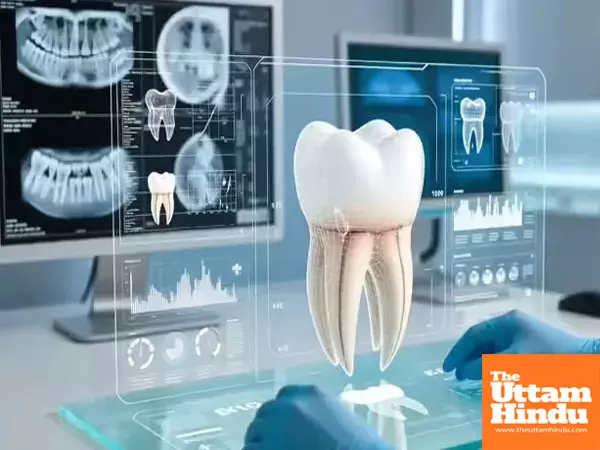
Ahmedabad (The Uttam Hindu): A dentist from Ahmedabad has achieved something in the world of science and forensics that had never been done before in the history of India. He has created India's first forensic dental database by traveling nearly 37,000 kilometers across the country. After nearly five years of hard work, samples were collected from 23 states and more than 2.2 lakh teeth were studied in depth. This is such a revolutionary research that in the future, it will prove to be a big weapon for the investigating agencies in solving complex crimes and accurately identifying the people killed in major accidents.
The secret of geographical and ethnic identity is revealed through the mystery of teeth
Dr. Jayashankar P. Pillai of the Government Dental College and Hospital began this landmark research with a key question: He wanted to know if an unknown person's identity, region, and background could be accurately determined based solely on their teeth. To solve this mystery, he collected millions of samples from across the country between 2020 and 2025. After evaluating each tooth on 15 different parameters, he found that in a diverse country like India, there are significant and distinct differences in the dental structure of people from different states. The upper front teeth and the first premolars proved to be the most effective in identifying people from different regions. Even ancient ancestors and genes can be revealed by looking at the structure of teeth without any extensive laboratory testing.
Teeth are a human's 'natural ID card'
The most surprising finding of this entire research is that teeth are the most robust and durable part of the human body. Despite devastating fires, floods, major accidents, or years of being buried in the soil, teeth remain completely intact. Even intense heat and decay remain unharmed even for centuries-old teeth. This is why forensic experts now consider teeth a human's "natural ID card." Dr. Pillai's study has proven that certain characteristics of teeth, such as the structure of the front teeth and the specific patterns found in canines and molars, are extremely useful for identifying a person. Certain ridges on the upper teeth make identification even more reliable.
The investigation system will be strengthened in India on the lines of foreign countries
Dr. Pillai says that India's dental record-keeping system is currently significantly weaker than in Western countries. Our investigative agencies often have to rely solely on photographs or limited evidence. This new database will be a significant lifesaver. Currently, accurate identification of a person's state based solely on the crown of a tooth is possible in approximately 14.3 percent of cases, but researchers are confident that the use of AI (Artificial Intelligence) and advanced technology will make this even more accurate. With this database, it will be easier to add a separate component, such as an "odontogram," to the corpse identification (DVI) form during a disaster, so that every dental feature can be recorded in government records.