
Finance Minister: 40% GST on pan masala, but health & security cesses won’t hit essentials
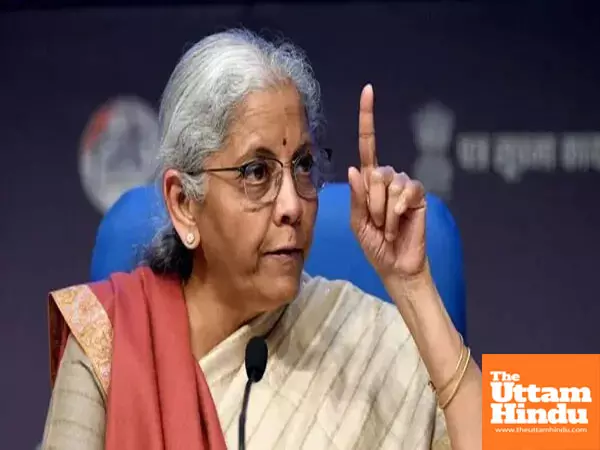
New Delhi (The Uttam Hindu) : Finance Minister Nirmala Sitharaman clarified on Thursday that the central government's proposed health and national security cesses will not be imposed on any essential goods. She said the revenue from these two cesses will be shared with the states for special health schemes and awareness programs.
The Health Security Cess and National Security Cess Bills, 2025 have already been passed by Parliament. During the discussion on these bills in the Lok Sabha, the Finance Minister said that this cess will be levied based on the production capacity of specific pan masala units. Sitharaman said, "The purpose of this cess is to reduce the consumption of pan masala products. A portion of the revenue generated from this will be shared with the states for health awareness, health programs, and other related activities."
40% GST on Pan Masala
The Minister said that a maximum of 40% Goods and Services Tax (GST) will be applicable on pan masala. In addition, a Health and National Security Cess will also be levied on the production capacity of pan masala manufacturers. This cess will ensure the flow of resources to two sectors of national importance, health and national security. Sitharaman said that since excise duty cannot be levied on pan masala, the government is bringing a separate cess bill to ensure that the production of pan masala is taxed along with the GST applicable on consumption.
It should be noted that harmful products like tobacco and pan masala currently attract a 28 percent GST, along with a compensation cess at various rates. After the compensation cess is abolished, the sale of tobacco and related products will attract 40 percent GST and excise duty, while pan masala will attract 40 percent GST and a health safety and national security cess. The Central Excise Amendment Bill proposes to impose an excise duty on cigars/cheroots/cigarettes ranging from ₹5,000 to ₹11,000 per 1,000 sticks. Furthermore, it proposes 60-70 percent excise duty on unmanufactured tobacco and 100 percent excise duty on nicotine and inhalant products.