
India has 250 million barrels of crude Oil, 7–8 weeks buffer available
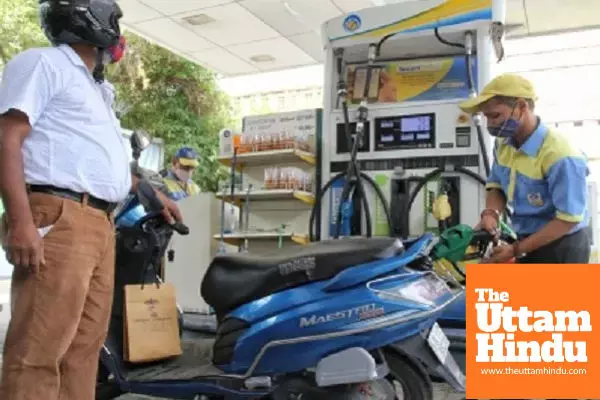
New Delhi (Uttam Hindu News): Top government sources have dismissed concerns that the current global energy situation could turn into a crisis for India. At present, the country has more than 250 million barrels (around 40 billion litres) of crude oil and petroleum products in stock, which provides a buffer of nearly 7–8 weeks across the entire supply chain.
New Delhi, March 7 (IANS): These reserves are not stored at a single location or in one form. They are distributed across above-ground storage tanks, underground strategic caverns, pipeline systems, terminal tanks, storage vessels in transit at sea, and three dedicated Strategic Petroleum Reserve facilities located in Mangalore, Padur and Visakhapatnam.
According to official sources, India currently holds sufficient reserves of crude oil, petrol, diesel, aviation turbine fuel (ATF), LPG and LNG to deal with short-term supply disruptions. At the same time, the country continues to receive energy supplies from multiple global suppliers. Sources clarified that claims suggesting global oil supply has stopped or that India has reserves for only 25 days are incorrect and do not reflect the actual supply and stock situation.
Officials stated that India is in a well-planned and strong strategic position, the result of consistent energy policies over the past 12 years. The buffer is real, supply routes are diversified, and imports continue regularly. This reserve should not be seen as a countdown system, but as an additional safeguard alongside regular imports. Oil shipments continue to arrive daily through multiple routes.
Even if supplies through the Strait of Hormuz are completely disrupted, the impact on India would only be partial due to its diversified sources. A large portion of India’s crude imports does not pass through this route. Over the past decade, India’s strategic oil diplomacy has expanded the number of supplier countries from 27 to 40, spread across six continents.
The era when India’s energy security depended on a single sea route has ended. Supplies now come from Russia, West Africa, the Americas, Central Asia and Middle Eastern routes outside the Gulf region. Therefore, if one route is disrupted, the country can adjust sources rather than face a supply crisis. According to sources, the Strait of Hormuz is not the only route for India’s crude oil imports. Around 40 percent of imports pass through this route, while about 60 percent arrive through other channels.
This diversification ensured that even during global crises or pandemics, Indian consumers did not face energy shortages. Several countries, including Australia and Canada, have also offered additional gas supplies. India is continuing to explore alternative sources to further strengthen energy security. Recently, the country also established new energy supply arrangements with partners such as the United States and the UAE.
India’s refining capacity stands at 258 MMTPA, making it the fourth largest in the world and higher than the country’s domestic consumption of around 210–230 MMTPA. Indian refineries are capable of processing multiple grades of crude oil and are not dependent on any single source.
According to sources, this flexibility itself is a strategic asset developed through policy decisions over the past decade. India is also the world’s fifth-largest exporter of refined petroleum products. When Europe imposed restrictions on Russian crude oil, Indian refineries played an important role in helping address fuel shortages. India has never depended on permission from any country to purchase Russian oil.