
Stock market under pressure before union budget: What's the data saying?
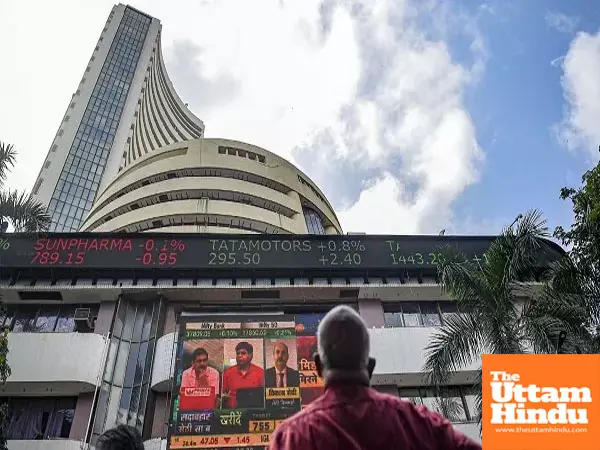
New Delhi (The Uttam Hindu): The Union Budget 2026-27 is just days away. Looking back at past years, uncertainty in the stock market increases as budget day approaches.
Data from 2010 to 2022 shows that the market often trades with a decline before the budget. This is primarily due to fears of sudden changes in government policies. However, the market often recovers after the budget.
According to market experts, the stock market has seen an average increase of 1.36 percent in the week after the budget.
One reason for the market's weakness before the budget is high volatility. According to data, the stock market sees an average intraday volatility of 2.65 percent on budget day.
Over the past 15 years, the Nifty has averaged a negative return of 0.52% in the week before the budget, with the Nifty closing higher only eight times during this period.
This trend has been evident in recent years as well. In four of the last five years, the Nifty has fallen in the month before the budget, including the January 2025 decline.
Rahul Sharma, Head of Technical and Derivatives Research at JM Financial Services, said the Union Budget 2026 is expected to boost economic growth while maintaining fiscal balance and addressing global pressures such as US President Donald Trump's tariff policies.
According to experts, the budget is likely to focus on increasing capital expenditure in infrastructure, defense, and railways to protect the country's economy from external shocks. An increase in the defense budget is also expected.
Industry bodies are demanding that MSMEs, manufacturing, green energy, artificial intelligence and exports be promoted and for this, steps like faster GST refunds and investment in logistics can be taken.
The expert further stated that the fiscal deficit is estimated to be 4.4 percent of GDP. Furthermore, the goal is to make India a $5 trillion economy by focusing on job creation, rural demand, and sustainable growth.
However, some risks remain. Markets could be volatile on Budget Day. If the budget doesn't deliver the expected relief or fiscal targets are impaired, selling could increase, leading to higher interest rates and a shortage of funds in the market.
Additionally, geopolitical tensions, rupee fluctuations, and disruptions to global trade could also impact the market. Delays in implementing domestic policies could also weaken investor confidence.
Experts also warn that high stock market valuations, FII selling and bursting of the AI bubble are some of the additional hurdles that could derail Nifty's rally to 29,000 levels this year.
Experts have advised investors to keep some cash safe until the situation becomes clear after the budget and focus only on select sectors like defence and public sector banks (PSU banks).
At the same time, CareAge Ratings estimates that the fiscal deficit will be 4.4 percent of GDP in the financial year 2026.
The report also stated that the fiscal deficit could be between 4.2 and 4.3 percent in FY 2027. During this period, the government's total borrowing is expected to be ₹16–17 lakh crore, and net borrowing is expected to be ₹11.5–12 lakh crore.