
Supreme Court tells CAQM to suggest pollution‑control measures beyond stubble burning
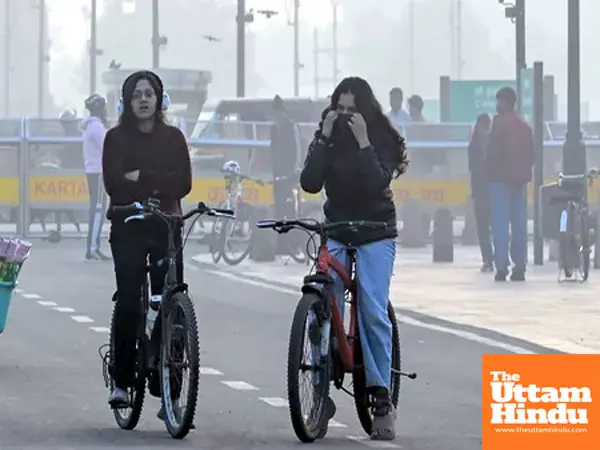
New Delhi (The Uttam Hindu): The Supreme Court has taken a tough stand on the ever-increasing air pollution in Delhi-NCR. During Monday's hearing, CJI Surya Kant stated clearly that this case will no longer be listed only in October, but will be heard regularly throughout the year.
The Supreme Court directed that the issue will be heard at least twice a month so that effective steps can be taken immediately to improve the situation.
During the hearing, the CJI questioned the actual state of the country's air quality and its scientific analysis, asking what was causing the most pollution. He said the court did not want to comment on stubble burning because farmers are often underrepresented in court.
He also reminded that stubble burning was still taking place during the COVID-19 pandemic, but people were still able to see clear and blue skies. Therefore, the issue of stubble burning should not become a matter of politics or ego.
The CJI said that whatever the farmers are burning is also a kind of property, hence it should not be made a subject of political debate. The court has fixed the next date of hearing as December 10.
During the hearing, the CJI asked the Commission for Air Quality Management (CAQM) what its short-term plan was to immediately improve the air quality in Delhi-NCR. The CAQM informed the court that it had already filed an affidavit outlining its short-term plan.
At the same time, Additional Solicitor General (ASG) Aishwarya Bhati, appearing for the Central Government, said that on the basis of the reports of all the agencies (Haryana, Punjab, CPCB and others), the government can file an Action Taken Report (ATR).
The CJI said that the court's purpose is not to blame any party but to find solutions. We cannot sit idle. We can provide a platform for all stakeholders to discuss and find solutions together.
The Supreme Court directed the CAQM to file a report within a week containing complete details of effective and concrete steps taken to prevent other causes of pollution besides stubble burning.