
Centre tells SC: Hands off faith, no women entry in Sabarimala
The Modi government opposes women's entry into Sabarimala temple, citing religious tradition and Lord Ayyappa's celibacy. The Supreme Court's 9-judge bench reviews the issue, with the government urging non-interference in faith
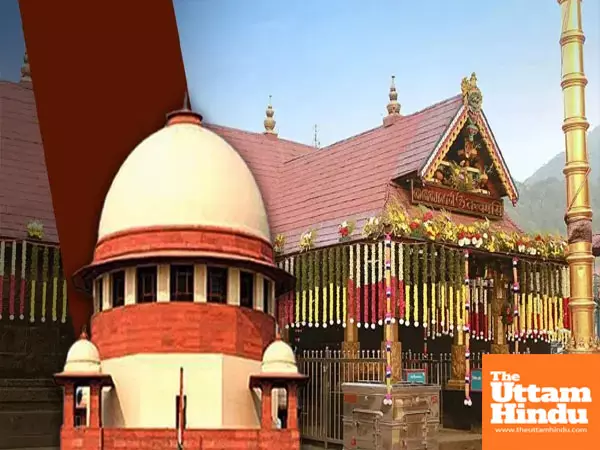
New Delhi (The Uttam Hindu): A centuries-old tradition and a major issue of religious faith has once again reached the doorstep of the country's highest court. A fresh legal battle erupted in the Supreme Court on Tuesday over the entry of women into the sacred Sabarimala temple in Kerala. On the very first day of the hearing before the nine-judge Constitution bench, the central government made its stand absolutely clear. The government stated unequivocally that women of menstrual age should not be allowed to enter the temple.
'Lord Ayyappa is a celibate, his sect is completely different'
During the hearing of review petitions filed in the Sabarimala controversy, the Central Government has strongly opposed the entry of women. Presenting its arguments before the court, the government clarified that Lord Ayyappa is a celibate and, under strict rules, he stays away from women. Ayyappa's devotees have a separate and distinct sect, which has its own strict rules and traditions. The government argues that the courts do not have the authority to pronounce upon people's deep-seated faith and religious beliefs.
Appeal to reconsider the decision of the year 2018
During this crucial hearing, the Central Government strongly supported a review of the landmark 2018 Supreme Court decision, which opened the temple's doors to women of all ages. The government argued that this issue is not limited to gender equality or gender parity; it directly concerns centuries-old religious tradition and the unwavering faith of the people. Courts should refrain from reinterpreting the nature of a deity or essential religious practices.
The court should leave religious matters to the society
A nine-judge bench headed by the Chief Justice is currently closely reviewing the principles of "essential religious practices" under Articles 25 and 26 of the Constitution and the extent to which courts can intervene in matters of faith. In an affidavit, the central government has suggested to the court that constitutional principles should always be respected during judicial review. Furthermore, the right to determine age-old religious norms and traditions should be left to the discretion of the community concerned.