
Government invokes Essential Commodities Act amid LPG crisis, mandates data sharing by oil and gas firms
Government invokes Essential Commodities Act amid LPG crisis, mandating oil and gas firms to share data with PPAC to ensure supply stability and energy security.
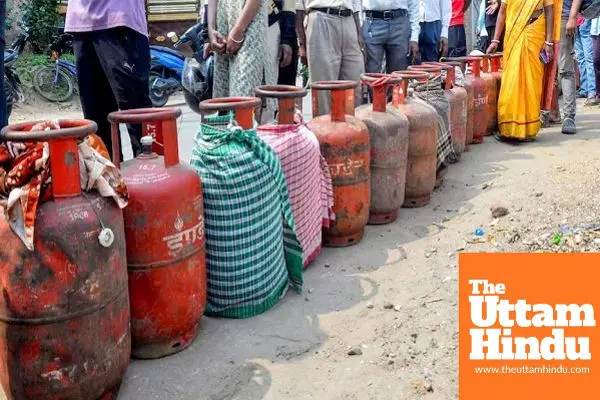
New Delhi (The Uttam Hindu): Amid the ongoing war in West Asia and a deepening global energy crisis, the government has invoked the Essential Commodities Act (ECA), making it mandatory for oil and gas companies to share operational data with authorities.
Under the new directive, companies involved in petroleum products and natural gas—including production, processing, refining, storage, import-export, marketing and consumption—must provide real-time data to the Petroleum Planning and Analysis Cell (PPAC).
PPAC to act as central data agency
PPAC, the data collection arm of the Petroleum Ministry, has been designated as the nodal agency under a gazette notification issued as per Section 3 of the Essential Commodities Act. According to Joint Secretary Sujata Sharma, PPAC will collect, compile, store and analyze data to assist the government in planning during emergencies.
The government has made it clear that any violation of orders issued under Section 3 will be treated as an offence, attracting penalties including imprisonment.
Focus on supply stability and price control
The Essential Commodities Act aims to ensure the availability of critical goods at fair prices. It also helps curb hoarding, black marketing and artificial shortages, thereby maintaining supply stability in times of crisis.
Under Section 3, the central government has the power to regulate production, supply and distribution. It can impose stock limits, control trade practices and even fix prices if needed. Section 5 allows these powers to be delegated to state governments for effective implementation.
India’s dependence on imports
India meets a significant portion of its energy needs through imports. The country sources crude oil from nearly 40 countries, including Venezuela, Russia and the United States. Natural gas imports come from countries such as the US, Australia, Norway and Russia.
The move is being seen as a proactive step to strengthen energy security and ensure uninterrupted supply amid global uncertainties.