
Govt greenlights ₹18,509 crore railway expansion, adds 389 km to network
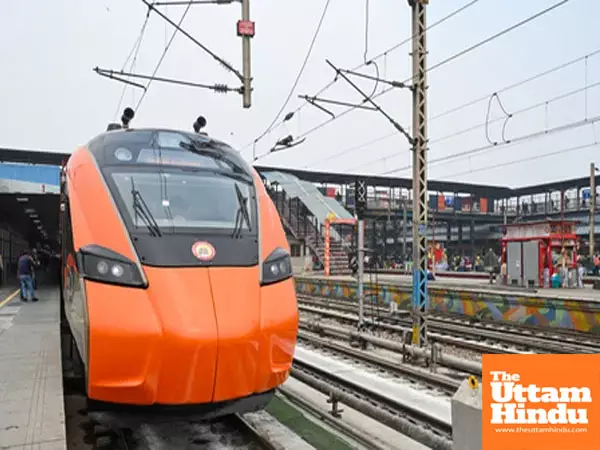
New Delhi (The Uttam Hindu): Three railway projects worth Rs 18,509 crore (estimated) have been approved in the meeting of the Cabinet Committee on Economic Affairs (CCEA) chaired by Prime Minister Narendra Modi.
According to the information given by CCEA, these projects include Kasara – Manmad (3rd and 4th line), Delhi – Ambala (3rd and 4th line) and Ballari – Hosapete (3rd and 4th line).
The increased line capacity will significantly improve traffic flow, resulting in increased operational efficiency and service reliability for Indian Railways. These multi-tracking proposals are designed to streamline operations and reduce congestion.
The CCEA further stated that these three railway projects will traverse 12 districts in Delhi, Haryana, Maharashtra, and Karnataka, expanding the Indian Railways network by approximately 389 kilometers. These projects will strengthen connectivity to 3,902 villages and benefit approximately 9.7 million people.
These projects are in line with Prime Minister Narendra Modi's vision of New India, which aims to make the people of the region self-reliant through comprehensive development, thereby increasing their employment/self-employment opportunities.
According to the CCEA, these projects are planned under the Pradhan Mantri Gati Shakti National Master Plan, which focuses on enhancing multi-lane connectivity and logistics efficiency through integrated planning and stakeholder consultation. These projects will ensure seamless movement of people, goods, and services.
The proposed capacity enhancement will improve rail connectivity to several major tourist destinations across the country, including Bhavali Dam, Shri Ghatandevi, Trimbakeshwar Jyotirlinga, Shri Mata Vaishno Devi Katra/Srinagar and Hampi (UNESCO World Heritage Site), Ballari Fort, Daroji Sloth Bear Sanctuary, Tungabhadra Dam, Kenchanagudda and Vijaya Vittala Temple.
The CCEA stated that the proposed projects are essential routes for the transportation of commodities such as coal, steel, iron ore, cement, limestone/bauxite, containers, food grains, sugar, fertilizers, oil, etc. The capacity enhancement works will result in additional freight capacity of 96 million tonnes per annum. Railways, being an environment-friendly and energy-efficient mode of transport, will help achieve climate goals and reduce the country's logistics costs. These projects will also reduce oil imports (220 million liters) and carbon dioxide emissions (1.11 billion kilograms), equivalent to planting 40 million trees.