
How did IndiGo's operations take a hit? 2,000 flights cancelled in 5 days, airports chaotic; know the inside story
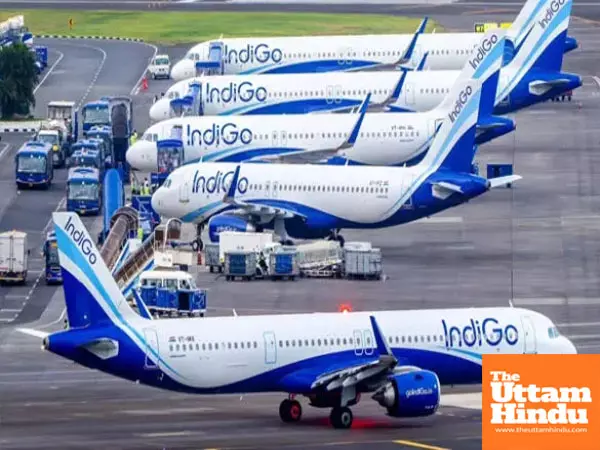
New Delhi (The Uttam Hindu): IndiGo, the country's most reliable and on-time airline, is currently going through the worst phase in its history. With over 2,000 flight cancellations in the last five days, airports across the country have resembled busy railway stations. The reasons behind how the country's strongest airline collapsed like a house of cards and why thousands of passengers were forced to spend the night at airports are now emerging layer by layer. This crisis did not arise overnight; rather, it is a combination of pilot shortages, new government regulations, and technical glitches.
The crisis began a few weeks ago with flight delays and technical glitches, which the airline tried to address by citing weather and congestion. However, the situation spiraled out of control when the government implemented new, stricter Flight Duty Time Limitation (FDTL) rules to address pilot fatigue. These rules mandated mandatory rest for pilots. IndiGo, already struggling with a staff shortage, had to remove a large number of pilots from the roster and put them on rest. With no backup staff, it had no option but to cancel flights.
The trouble didn't end there; a security alert involving Airbus A320 aircraft added fuel to the fire. Several late-night flights had to be cancelled immediately after a technical alert was issued during night flights. Since the new rules came into effect after 12 midnight, the sudden cancellations disrupted the entire calculation of crew availability. IndiGo's vast network, once its strength, proved to be its weakness. The network was so vast that a disruption in schedule at one location would cause a chain reaction across the country, leaving thousands of crew members and aircraft stranded at the wrong locations.
In light of the growing uproar, the DGCA has now taken a U-turn and withdrawn the rule prohibiting pilots from converting their weekly rest periods into holidays, which is expected to provide some relief to the airline. However, the pilot union has directly criticized the management. They allege that the management was aware of the new rules in advance, but instead of making recruitments, they adopted a policy of staff reduction, the consequences of which are now being faced. Whether the reasons are technical or administrative, the real consequences of this mismanagement are being borne by the general public, who are forced to suffer between cancelled flights and skyrocketing fares.