
Major flaws detected in Vande Bharat train manufactured at RCF for the first time
Major technical flaws have reportedly surfaced in the first Vande Bharat train manufactured at Rail Coach Factory, raising questions about its systems and components.
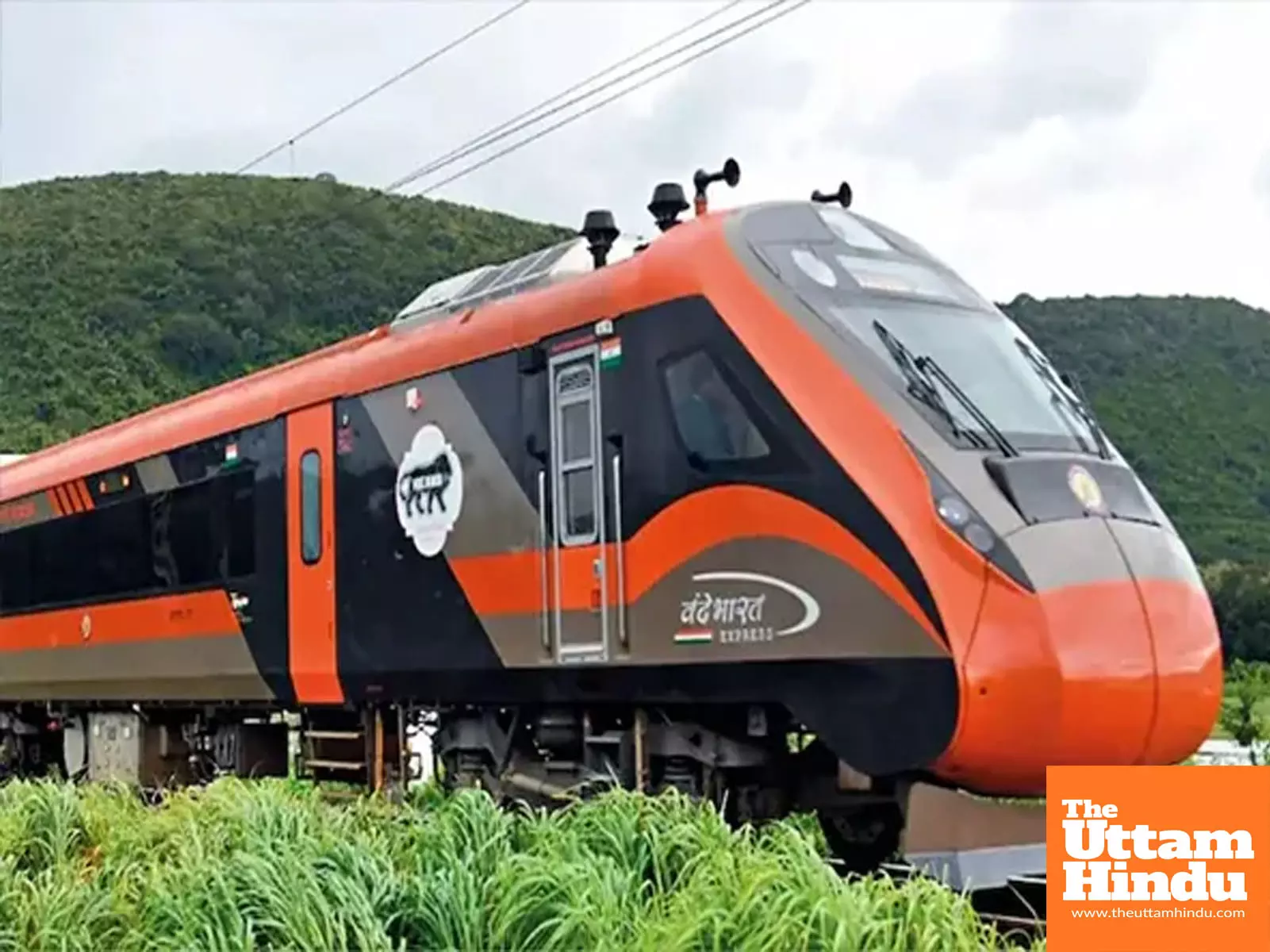
Kapurthala (The Uttam Hindu): The Railway Board has approved the commissioning of the first 16-coach Vande Bharat chair car train manufactured at Rail Coach Factory (RCF), Kapurthala. However, technical inspections and trials revealed several shortcomings, prompting the Board to direct the RCF administration to rectify them immediately. The issues include an unresponsive driver touchscreen, unlabelled circuit breakers and loose fire extinguisher covers. Although the train is technically approved for speeds of up to 160 km/h, it will initially operate at a maximum of 130 km/h due to track restrictions.
Until now, Vande Bharat chair car trains operating across India have been manufactured at Integral Coach Factory (ICF), Chennai. The 16-coach rake produced at Kapurthala is the first of its kind manufactured outside Chennai and uses a propulsion system supplied by French multinational Alstom. In a letter dated October 23, the Railway Board recommended the train’s operation to the Research Designs and Standards Organisation (RDSO), zonal railways and the Chief Commissioner of Railway Safety, while listing technical issues that require attention.
According to the Railway Board’s technical document, the Driver Display Unit touchscreen in the locomotive pilot’s cab is not responding properly. The screen is essential for monitoring train-control and safety parameters. The Board also flagged the use of single-pole miniature circuit breakers (MCBs) instead of double-pole units used in earlier trains. The absence of clear identification labels could make electrical fault detection difficult. In addition, the suitability of the new 270-kW traction motor is to be tested, compared with the 210–225-kW motors used in previous ICF-manufactured trains.
Inspectors also found loose acrylic covers on fire extinguishers inside the coaches and directed officials to secure them for quick access during emergencies. Meanwhile, the train’s operational speed will remain capped at 130 km/h because of route restrictions. Separately, the Railway Board is preparing for the introduction of Vande Bharat Sleeper services for long-distance travel. The first sleeper train is expected to be launched on the Bengaluru–Mumbai route on November 1, while ICF Chennai is scheduled to finalise the design of a 24-coach Vande Bharat Sleeper train by November 10.