
Milk poured into Narmada sparks debate in malnutrition-hit state
11,000 liters of milk poured into Narmada River sparks debate in Madhya Pradesh over faith, malnutrition, and environmental concerns.
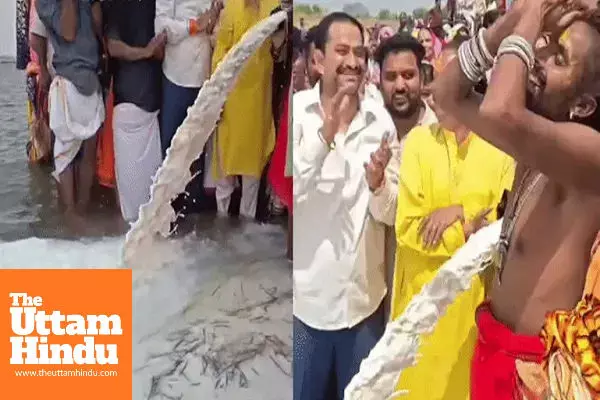
Sehore (The Uttam Hindu): A viral video from the banks of the Narmada River has triggered a widespread debate across Madhya Pradesh over faith, resource use, and environmental concerns. The video shows thousands of liters of milk being offered into the river during a religious ritual, raising serious questions.
The incident is reported from Satdev village in Sehore district at the Shri Dadaji Darbar Pataleshwar Mahadev Temple. The grand event took place during Chaitra Navratri, spanning 21 days from March 18 to April 7. Various religious activities, including Mahayagya, Shiv Mahapuran recitations, and Durga Path, were organized on a large scale.
The controversy centers around a ritual where approximately 11,000 liters of milk was poured into the river in a single day as part of a ‘Maha Abhishek’. Devotees defended the act, stating that it is a matter of faith, where the river is worshipped as a mother and offerings are part of long-standing traditions.
However, the incident has drawn criticism, especially on social media. Critics pointed out that in a state battling significant levels of child malnutrition, such use of resources raises ethical concerns. Many argued that the milk could have been better utilized to support undernourished children.
Environmental experts have also expressed concern. They warn that pouring large quantities of milk into water bodies can affect water quality by increasing biochemical oxygen demand (BOD), which reduces oxygen levels and threatens aquatic life such as fish and other organisms.
The incident has now sparked a larger conversation about balancing religious faith with social responsibility and environmental sustainability, with differing opinions emerging among citizens and authorities.