
Revolution in connectivity as ISRO readies ‘Bahubali’ launch to power tower-free 5G
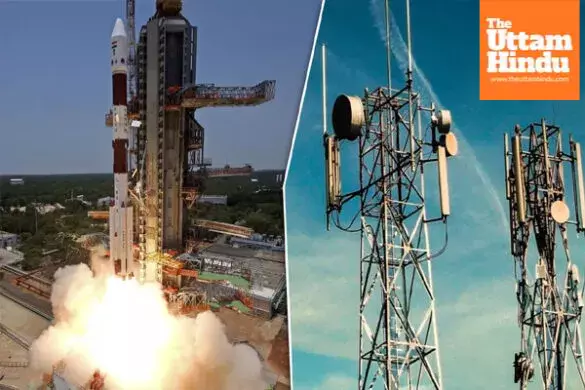
Sriharikota (The Uttam Hindu): The Indian Space Research Organisation (ISRO) is set to create another history tomorrow, Wednesday, which will completely change the way of communication in the lives of common people. ISRO is set to launch the "Bluebird Block 2" satellite from the Satish Dhawan Space Centre in Sriharikota at 8:54 am on Wednesday. This mission will be carried out using ISRO's heaviest and most powerful rocket, LVM3-M6, also known as "Bahubali" due to its tremendous capacity. The biggest feature of this launch is that this satellite will act as a mobile tower in space, which in the future will eliminate the problem of mobile network on mountain peaks, dense forests, deserts and even in the middle of the ocean.
Mobile tower to be deployed in space
This satellite is considered a major leap in the world of telecommunications. The Bluebird Block 2 satellite, developed by the American company AST SpaceMobile, is completely different from traditional satellites. Upon reaching space, it will deploy its massive 223-square-meter phased array antenna, the largest commercial communications antenna ever deployed in low-Earth orbit. Weighing approximately 6,500 kilograms, this satellite will act as a "powerful cell tower" in space. With its help, signals will be directly transmitted to your standard 4G and 5G smartphones without any additional equipment or satellite phone.
How will this technology work?
The biggest advantage of this technology is that when your smartphone moves out of range of a mobile tower on the ground, it will automatically connect to the Bluebird satellite network in space. This requires no modifications to the phone. The satellite is capable of picking up even the weakest signals sent by the phone and relaying them back to a gateway station on Earth, where the call or data reaches your mobile network. This satellite is capable of delivering internet speeds of up to 120 megabits per second, allowing for uninterrupted video streaming and calling.
The second major collaboration between ISRO and America
This mission is another excellent example of space cooperation between India and the United States. Earlier in July, ISRO launched the NISAR mission in collaboration with NASA. This will be the ninth mission of LVM-3 and ISRO's 101st launch overall. This is the Indian space agency's fifth mission in 2025. While the service's initial coverage will be limited to the United States, it will later expand globally. If successful, this mission will bring mobile connectivity to remote areas of the world where tower installation has been impossible until now.