
SC declines to suspend CEC Gyanesh Kumar, seeks ECI reply on unilateral decisions charge
Matter arose after media report claiming 14 objections in 10 months over SIR and Form 6 changes.
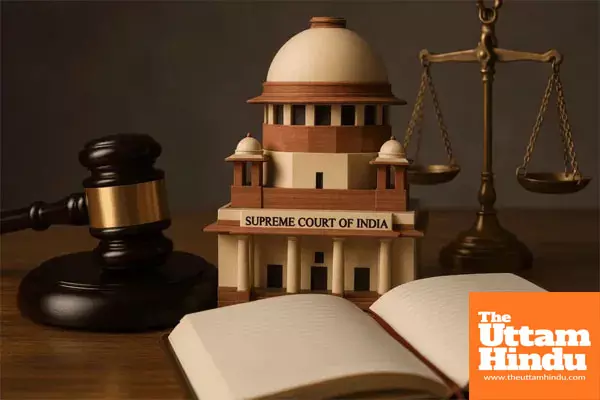
New Delhi (The Uttam Hindu): Important news has come out from the Supreme Court in the highly sensitive matter related to alleged differences and allegations of unilateral decisions between Chief Election Commissioner (CEC) Gyanesh Kumar and the other two Election Commissioners within the Election Commission of India (ECI). The bench headed by Chief Justice of India (CJI) Surya Kant has clearly refused to pass any interim order related to immediate suspension of the Chief Election Commissioner from his post or stripping him of his powers. However, considering the seriousness of the matter, the court has issued a formal notice to the Election Commission and sought a reply.
If unilateral decisions are taken, all will be cancelled: While hearing a blunt
petition in the Supreme Court, the bench of CJI Surya Kant made it clear in strong words that if it is proved from the official records of the Commission that the decisions were taken by ignoring the rules and institutional consensus, then the court will immediately cancel them. The apex court said, “First let the reply to the notice come. If it comes to light from the Election Commission and the records that certain decisions were taken unilaterally without the consensus or majority of the three-member Commission, then we will cancel all those decisions.”
Senior lawyers raised serious questions on the functioning and procedures of the CEC
During the hearing, senior advocate Vikas Singh, appearing for the petitioners, argued that the powers of the CEC should be suspended or administrative powers be withdrawn from them until the final hearing of this case is completed. Meanwhile, senior advocate Maneka Guruswamy, arguing on another petition, highlighted the changes made in 'Form 6' related to voter registration and serious flaws in the SIR process.
Guruswamy argued that the matter involved the impartiality and credibility of a national constitutional institution like the Election Commission. He told the court, "We have grown up in an environment of free and fair elections in this country, but that is not the case today." Chief Justice Surya Kant remarked, "We also do our homework and are well aware of all aspects of the matter."
Claims of objections raised 14 times in 10 months, action denied based on media reports alone
The entire controversy reached the Supreme Court after an investigative media report. The report claimed that Election Commissioners Sukhbir Singh Sandhu and Vivek Joshi had officially lodged strong objections at least 14 times to decisions and orders issued by the SIR during the last 10 months. Both commissioners alleged that several important policy orders were issued directly without their consent or knowledge.
When the petitioners cited media reports, CJI Surya Kant stated that the three members of the Election Commission are expected to reach a unanimous decision, and if there is no consensus, the decision should be based on a majority vote. He clarified that an immediate punitive or interim order of suspension cannot be passed based solely on a media report; the court will first review the Election Commission's official response and internal records, before issuing an appropriate judicial order.