
World Social Justice Day 2026: Significance of February 20 and this year’s theme explained
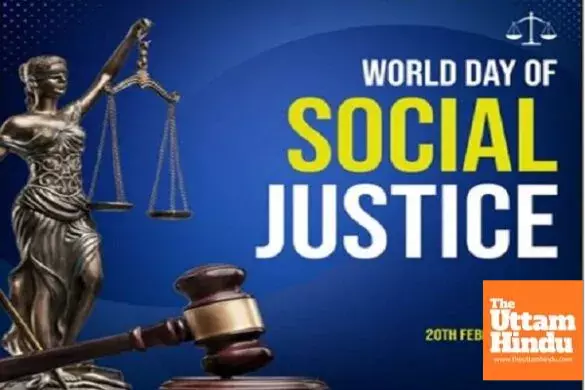
New Delhi (The Uttam Hindu): 'World Day of Social Justice' is a global call to address challenges like poverty, exclusion, unemployment and inequality, while promoting solidarity, harmony and equality of opportunity in society. Initiated by the United Nations, this day is celebrated every year on 20 February. This day was started because the focus was on social justice and development for peace, security and protection of human rights within and between nations. The United Nations General Assembly declared this day in its 62nd session on 26 November 2007. In India, this day has been celebrated every year on 20 February since 2009.
The day emphasizes the continued need for social justice initiatives amid global challenges such as the financial crisis, insecurity, and growing inequality. The International Labour Organization's (ILO) 2008 declaration "Social Justice for a Fair Globalization" also plays a key role, focusing on equal opportunity and social protection.
In 2026, the day will be celebrated with the theme “Renewed Commitment to Social Development and Social Justice.” This theme follows the Second World Social Development Summit in Doha and the Doha Political Declaration. Member States reiterated the 1995 Copenhagen Declaration, which identified poverty eradication, productive employment, decent work, and social inclusion as the key pillars of social development. The theme emphasizes the need to translate political commitments into concrete results, including the inclusion of a social dimension in economic, labor, climate, digital, and industrial policies.
In India, this day has been celebrated since 2009. The Ministry of Social Justice and Empowerment (MoSJE) is actively working to bridge the socio-economic divide through legislative reforms, grassroots empowerment, and global partnerships. The Constitution of India provides a strong foundation for social justice.
Among the fundamental rights, Article 23 prohibits human trafficking and forced labour, while Article 24 prohibits child labour. Article 38 provides for the reduction of inequalities, Article 39 for equal livelihood and fair wages, Article 39A for free legal aid, and Article 46 for special incentives for SC/ST and weaker sections.
The Ministry's goal is to create an inclusive society where marginalized communities can live safe, dignified, and meaningful lives. Rehabilitation initiatives are implemented through educational, economic, and social programs. The Government of India strives to create a society where the poor, disadvantaged, and marginalized can also live with dignity. Education, employment, financial assistance, and social programs are essential for this purpose.
In 1985-86, the Government of India divided the Ministry of Welfare into two parts: the Department of Women and Child Development and the Department of Welfare. It also incorporated some departments from the Ministry of Home Affairs and the Ministry of Law. Later, in May 1998, the ministry was renamed the Ministry of Social Justice and Empowerment.
- Tags
- #SocialJustice