
Mann government standing with flood-affected farmers, ₹74 crore worth of wheat seeds being distributed free of cost
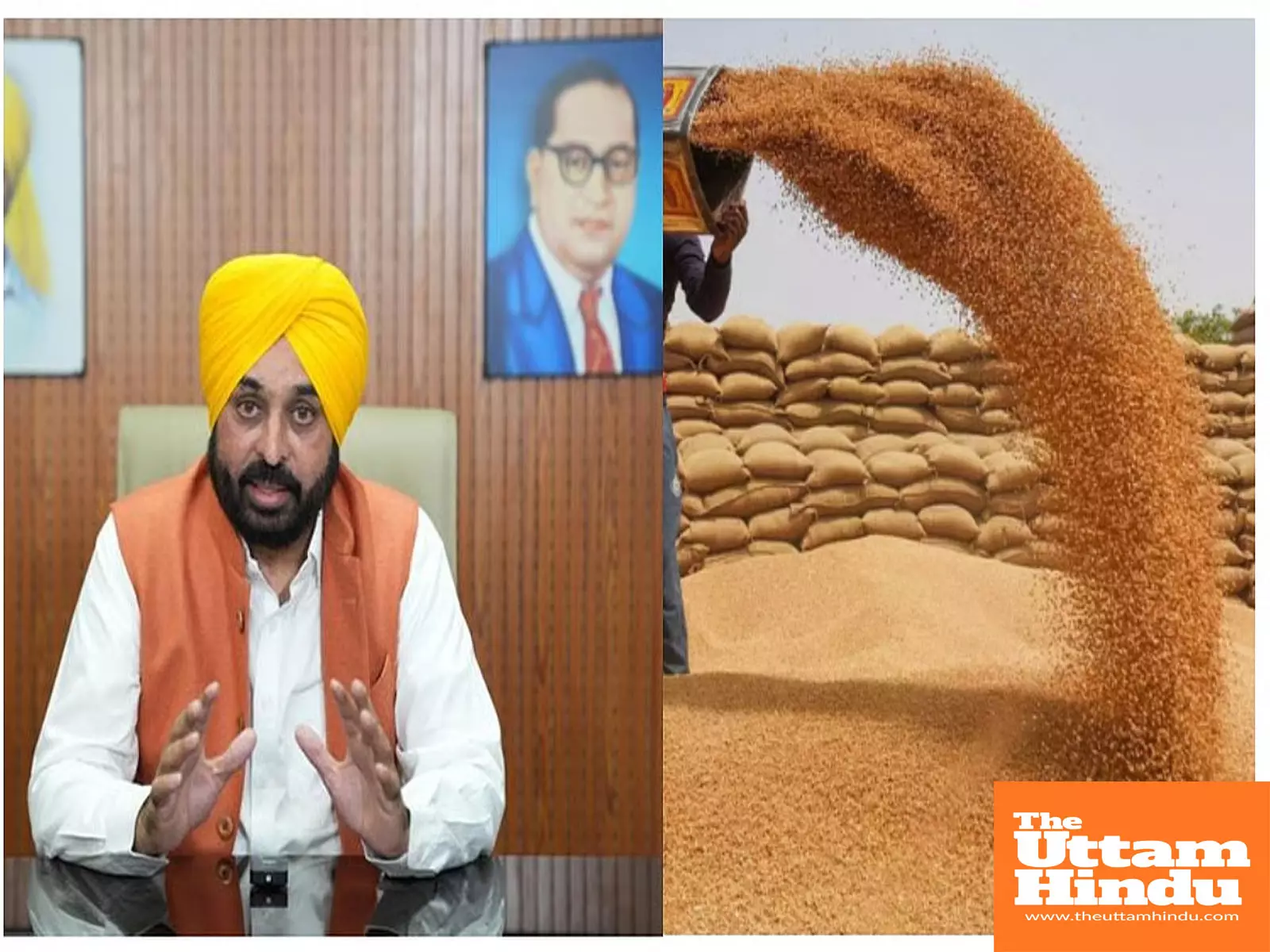
Chandigarh(The Uttam Hindu): For the first time in Punjab’s history, a Chief Minister—Bhagwant Singh Mann—has personally flagged off trucks carrying relief for farmers. Chief Minister Mann dispatched seven trucks loaded with wheat seeds to flood-affected districts. These are not just trucks filled with seeds—they are vehicles carrying hope and a new beginning for lakhs of farmers. A total of two lakh quintals of wheat seeds, worth ₹74 crore, are being provided completely free of cost.
When devastating floods struck Punjab, farmers were left with nothing but tears. Standing crops on over five lakh acres of land were submerged. Months of hard work were destroyed overnight. Many farmers, already burdened with loans, were pushed to the brink of despair—even contemplating suicide. But the government acted in time, and before the sowing of the Rabi season, seeds are now being delivered directly into the hands of farmers. These seeds are being distributed in their villages without any paperwork or formalities.
Expressing deep emotion, Chief Minister Bhagwant Singh Mann said, “Our farmers are the backbone of this country. When the whole nation sleeps, the farmer continues to work in his fields. It is because of his labor that the country is fed. Today, when he is in trouble, how can we step back? This ₹74 crore is not an expenditure—it's our government’s respect for the farmers.”
He further added that Punjab’s farmers played a crucial role in the Green Revolution and ensured India’s food security; now it is the government’s duty to support them in their hour of need.
The scale of devastation caused by the floods was unimaginable. Over 2,300 villages across Punjab were submerged. More than 20 lakh people were affected. The most heartbreaking loss was the death of 56 innocent lives. Nearly seven lakh people were displaced and forced to live in relief camps. Children lost months of schooling, elderly people struggled without medicines, and women had no place to cook food. This disaster is among the worst in Punjab’s history.
The floods also severely damaged the education and health sectors. Over 3,200 government schools were completely destroyed. Buildings of 19 colleges collapsed into rubble. The education of lakhs of children came to a standstill. Similarly, 1,400 clinics and hospitals were damaged, forcing patients to travel long distances for treatment. Many seriously ill patients lost their lives because they could not receive timely medical care. This wasn’t just the destruction of infrastructure—it was the collapse of entire systems.
The loss of infrastructure reveals the sheer magnitude of the disaster. Nearly 8,500 kilometers of roads were washed away or fully damaged. About 2,500 bridges collapsed, cutting off villages from nearby towns. Essential supplies like food, medicines, and drinking water could not reach many areas. Electric poles fell, transformers burned out, and people lived in darkness for weeks. Water supply was disrupted because pumping stations were damaged. Life came to a standstill.
Initial estimates place the total damage at ₹13,800 crore, but the real loss could be far greater. Crop destruction, livestock deaths, collapsed houses, and washed-away shops are losses that are difficult to calculate. Many farmers said their lifetime savings were wiped out in a single night. Those who had taken bank loans for farming are now unable to repay them.
Recognizing the gravity of the situation, the government decided to deliver immediate relief. The free distribution of wheat seeds marks the beginning of a larger effort to help farmers rebuild their lives and regain their livelihoods. (Advertorial)