
Jwala's big litter: 5 Cheetah cubs born in Kuno, India's Cheetah count jumps to 53
This is Jwala's third litter, marking a significant milestone in India's cheetah conservation efforts. The cubs are healthy and adding to the country's cheetah population. This brings the total number of cheetah births in India to 33
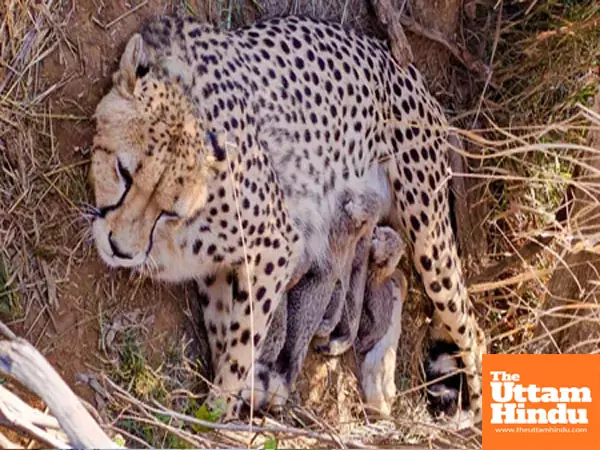
New Delhi (The Uttam Hindu): Union Environment, Forest and Climate Change Minister Bhupender Yadav on Monday informed that Namibian cheetah 'Jwala', who has successfully become a mother for the third time, has given birth to five cubs in Kuno National Park.
In a post on social media platform X, the minister said that with this birth, the number of healthy cubs born in India has increased to 33, marking the 10th successful breeding of cheetahs on Indian soil and another significant success in India's cheetah conservation journey.
The Union Minister described this as a moment of immense pride for 'Project Cheetah' and said that this achievement reflects the dedicated efforts, skills and commitment of veterinarians, field staff and all those associated with the project, who are continuously working tirelessly on the ground. He also informed that with the arrival of these cubs, the total number of cheetahs in India has reached 53.
Calling it a historic and heartwarming moment for wildlife conservation, the Minister expressed hope that Jwala and her cubs will recover and grow, taking India's cheetah story to even greater heights. He further said, "A historic and heartwarming moment for wildlife conservation. May Jwala and her cubs grow strong and grow, taking India's cheetah story to even greater heights."
Recently, Gamini, a cheetah from South Africa, became a mother for the second time and gave birth to four cubs. Additionally, on February 28, the Union Minister released nine cheetahs, six females and three males, acquired from Botswana, into quarantine enclosures in Kuno National Park in Madhya Pradesh. These cheetahs are currently undergoing acclimatization and health monitoring before being gradually released into larger forest areas.