
Astronauts face extreme space radiation: How they stay safe in the cosmos? Learn here
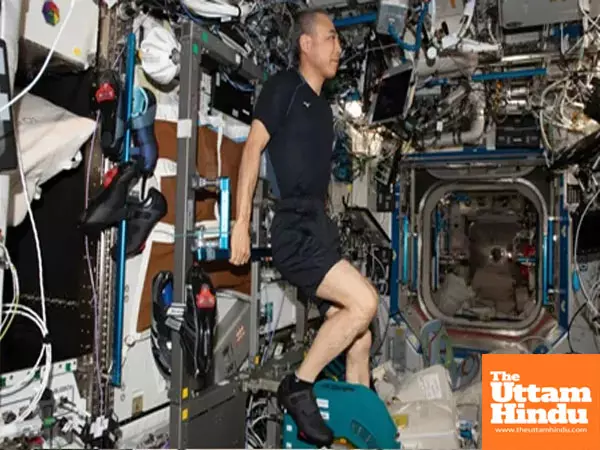
New Delhi (The Uttam Hindu): Space travel is exciting, but it also poses many challenges. A major challenge is space radiation. On Earth, the magnetic field and atmosphere protect us from most harmful particles. Here, we are exposed to some natural radiation every day, but in space, astronauts are exposed to a different and much greater amount of radiation, which is far more dangerous than the radiation we experience on Earth.
There are three main sources of cosmic radiation. First, particles trapped in the Earth's magnetic field, in the form of energetic protons and electrons in the Van Allen belts. Second, solar energetic particles emanate from the Sun, emitted during solar flares and coronal mass ejections. Third, and most important, are galactic cosmic rays. These high-speed rays, originating from supernova explosions outside our galaxy, are the most challenging, as complete protection from them is nearly impossible.
High radiation exposure can cause nausea, vomiting, fatigue, or skin irritation. But the main risk comes in the long term, with cancer, heart disease, cataracts, nervous system damage, and effects on reproductive health. Research on animals and cells has shown that heavier particles of space radiation, called high-Z particles, damage DNA more deeply, increasing the risk many times greater than radiation exposure on Earth. Scientists are constantly working to address this problem for astronauts.
According to the US space agency NASA, several strategies are adopted in space, such as shielding, which involves placing water tanks, polyethylene, hydrogen-rich materials, or multilayer shields on spacecraft. These help block particles. Another is radiation monitoring; new detectors are being developed that measure the amount and type of radiation in real-time. There are also operational methods, such as moving passengers to the safest part of the spacecraft, such as storage or near water, during a solar storm. Equipment and luggage are used as shields.
Astronauts are carefully selected, trained, and mentally prepared. During long missions, they are trained to cope with sleep, fatigue, boredom, and isolation. Various activities maintain morale. Space radiation is a major obstacle to space travel, but scientific efforts are being made to control it so that humans can safely travel to the Moon, Mars, and beyond.
Missions to the International Space Station typically last 6 to 12 months, but Mars missions can last 2 to 3 years. This can increase the total radiation dose many times over. Therefore, many space agencies, including NASA, are constantly working on new research, better detectors, and advanced materials.