
Bangladesh rattled by lower tariffs for India, Yunus set for a ‘secret’ deal with Trump
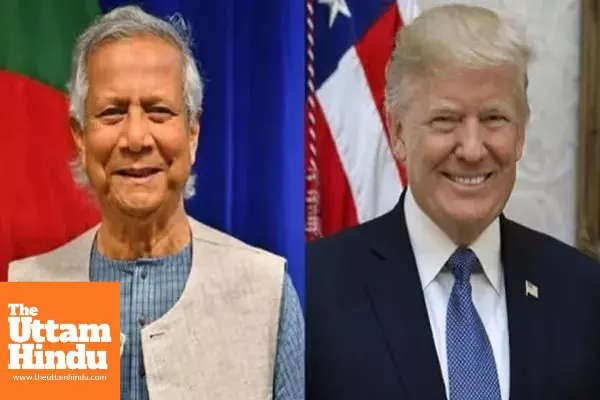
New Delhi (The Uttam Hindu): Concerns have grown in Bangladesh following the India–US trade deal, under which tariffs on Indian goods have been reduced. In the latest development, a trade agreement between the United States and Bangladesh is likely to be signed on February 9. The secrecy surrounding the terms of this proposed deal has triggered criticism within Bangladesh.
The issue has gained further political sensitivity as Bangladesh is scheduled to hold general elections on February 12. Just days before the polls, discussions around this alleged “secret deal” have intensified. After the India–US trade agreement, Bangladesh has reportedly moved quickly to finalise its own deal with Washington. The US has reduced tariffs on Indian products to 18 percent.
Bangladesh fears that if it fails to secure similar or better terms, it could face a competitive disadvantage against India in the US market. The country’s economy is heavily dependent on ready-made garment (RMG) exports to the US, which account for nearly 90 percent of its total exports to the American market.
This development comes against the backdrop of the US imposing a steep 37 percent tariff on Bangladesh in April 2025. After negotiations, the tariff was reduced to 35 percent in July and further cut to 20 percent in August. Under the proposed trade agreement, expectations are that tariffs could be lowered further to around 15 percent.
Meanwhile, in mid-2025, the interim government led by Muhammad Yunus signed a formal non-disclosure agreement with the United States. Under this agreement, both sides agreed to keep all tariff-related and trade negotiations confidential. No draft of this understanding was shared with the public, parliament, or major industry stakeholders.
Reports suggest that the proposed deal includes several conditions, such as reducing imports from China and increasing military imports from the United States. It also reportedly allows unrestricted entry of US products into Bangladesh and mandates acceptance of US standards and certifications without objections.
Additionally, the US has sought exemption from inspections on American vehicles and auto parts, enabling easier access for US automobiles to the Bangladeshi market.
Devpriya Bhattacharya, Fellow at the private research organisation Centre for Policy Dialogue (CPD), told Prothom Alo that the trade deal lacks transparency, as there has been no opportunity to discuss its potential benefits and risks.
He further noted that it is a matter of concern for a non-elected interim government to move ahead with such an agreement just three days before elections. In such a scenario, the responsibility of implementing the deal would fall on the new government that comes to power after the polls.