
Global shockwave after Iran strike: 10 big changes coming
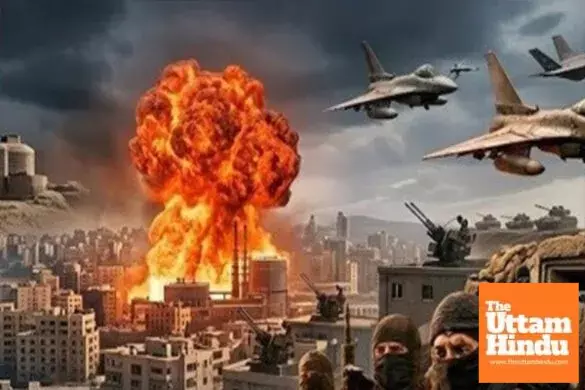
New Delhi (The Uttam Hindu): Iran’s Supreme Leader Ali Khamenei has reportedly been killed in large-scale attacks carried out by the United States and Israel, an event being described as a major turning point in the Middle East crisis. The development is seen as a significant moment for Washington, which has long opposed Iran’s leadership, and observers believe efforts to reshape Iran’s political structure could intensify. The end of Khamenei’s decades-long rule is expected to create major political uncertainty inside Iran. At the same time, messages shared from his official account suggest that his supporters remain determined and may seek retaliation. Analysts warn that this development could lead to several far-reaching global consequences.
One of the most immediate effects is expected to be a sharp rise in energy prices. A prolonged conflict could trigger a global energy crisis, pushing up the cost of petrol, diesel and cooking gas, along with electricity tariffs. Higher fuel costs may disrupt global supply chains, increasing the prices of transport, food and essential goods. Economies across the world, including India, could face increased inflationary pressure as a result of the situation.
The conflict could also expand across the Middle East if hostilities intensify after Khamenei’s death. Armed groups allied with Iran in the region may become more active, raising fears of a prolonged confrontation. In such a scenario, the United States may increase its military presence in the region, adding to already high tensions. Iran may also speed up efforts to strengthen its defence capabilities, including its nuclear programme, while any disruption to shipping routes such as the Strait of Hormuz could severely affect global oil supplies.
Global financial markets are also expected to remain volatile amid uncertainty. Investors may react cautiously, leading to fluctuations in stock markets, particularly in energy-related sectors. At the same time, the positions of major powers such as Russia, China and India will be closely watched, as their responses could influence the direction of the crisis.
There are also concerns that the conflict could worsen humanitarian conditions, potentially forcing large numbers of people to leave their homes and creating pressure on neighbouring regions. The situation has also raised questions about the effectiveness of the United Nations in preventing conflicts and maintaining global stability, with critics arguing that the crisis highlights the challenges faced by international institutions in dealing with major geopolitical tensions.