
High alert in Strait of Hormuz: pak tanker takes U-turn after US-Iran talks fail, oil supply concerns rise
Rising tensions after failed US-Iran talks force tankers to take U-turns in the Strait of Hormuz, raising concerns over global oil supply and maritime security.
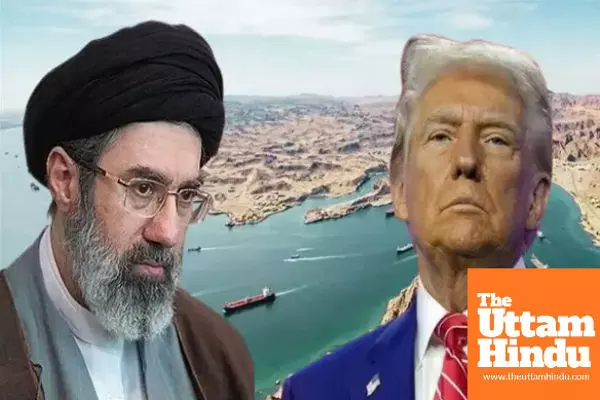
New Delhi (The Uttam Hindu): Tensions in the Middle East have intensified after the failure of US-Iran peace talks in Islamabad, triggering a major development in the Strait of Hormuz. According to ship-tracking data, two empty supertankers turned back at the last moment while entering the Persian Gulf on Sunday, raising fresh concerns over regional security.
Reports indicate that three Very Large Crude Carriers (VLCCs) were moving through the Gulf of Oman towards the Strait. As they reached near Larak Island, a key checkpoint in the waterway, two vessels—‘Aegeos Fanerios-I’ bound for Iraq and Pakistan-flagged ‘Shalamar’—suddenly reversed course. The decision was reportedly taken due to rising security risks in the region.
While two ships retreated, a third tanker, ‘Mombasa B’, continued its journey. It passed between Qeshm Island and Larak Island, a route considered relatively safer. However, its final destination remains unclear.
Experts believe the sudden U-turns are directly linked to the breakdown of US-Iran negotiations. Despite prolonged discussions, no concrete agreement was reached, increasing uncertainty around the Strait’s safety.
The Strait of Hormuz remains one of the world’s most critical energy corridors, through which nearly 20% of global crude oil supply passes. Ongoing military tensions have already disrupted supply chains, forcing ships to consider longer and more expensive alternative routes. This could potentially impact global oil prices and the broader economy.
Similar incidents have been reported in recent weeks, with several container and LNG vessels also turning back due to security concerns. These developments highlight continued instability in the region and signal possible disruptions to global trade in the near future.