
How microgravity affects immune system, insights from ISS ‘Immune Assay’ study
ISS Immune Assay reveals how microgravity weakens immune system, offering insights for astronaut health and future medical treatments on Earth.
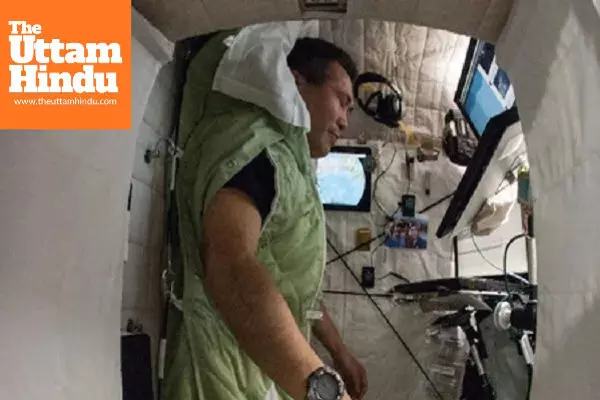
New Delhi (The Uttam Hindu): Microgravity and radiation during space missions pose significant challenges to the human immune system. Scientists are continuously studying how these conditions affect astronauts aboard the International Space Station (ISS).
Monitoring immune changes in space
The European Space Agency’s “Immune Assay” is helping researchers track cellular immune function using astronauts’ blood samples over time. Earlier ground studies in 2023 revealed that microgravity and isolation can weaken the body’s ability to fight infections.
With the help of a new onboard testing device, such monitoring is now possible directly in space. This allows scientists to observe immune system changes during flight more accurately, providing valuable data for both space and Earth-based medical research.
Impact on immune cells
Microgravity causes changes in immune cells that resemble accelerated aging, known as immunosenescence. However, this process occurs much faster in space. It affects cells responsible for tissue repair and regeneration, potentially weakening the body’s defense mechanisms.
Researchers are studying whether these changes reverse after astronauts return to Earth, which is a key focus of ongoing investigations.
Key findings from studies
Previous experiments, including “T-Cell Activation in Aging,” showed that gravity plays a crucial role in activating T-cells, which guide immune responses. In microgravity:
Certain genes are downregulated
Cell responses become weaker
Production of cytokines (cell communication proteins) decreases
Healing slows down
Cell multiplication capacity is reduced
As a result, the body’s ability to fight infections declines.
Health risks during long missions
Another study, “Integrated Immune,” analyzed blood, urine, and saliva samples before, during, and after space missions. Findings indicated that astronauts may experience:
Skin rashes
Breathing issues
Bone loss
Kidney stones
Immune system imbalance
Without proper nutrition and medication, these risks may increase during long-duration missions.
Advancing future research
Further ESA studies, including “Immuno” and “Immuno-2,” revealed changes in toll-like receptors and stress responses, varying among individuals. These studies also incorporate data from ECG, blood oxygen levels, activity monitoring, and psychological assessments.
Scientists believe that studying microgravity can provide new insights into stem cell biology and immune aging. This research could help develop better treatments for weakened immune systems in elderly populations on Earth, as well as improve safety for astronauts on long-term space missions.