
Iran attack disrupts Qatar LNG supply, global energy concerns rise; impact may last up to five years
Iran attack on Qatar LNG facilities disrupts global gas supply, affecting India and other countries, with recovery expected to take up to five years.
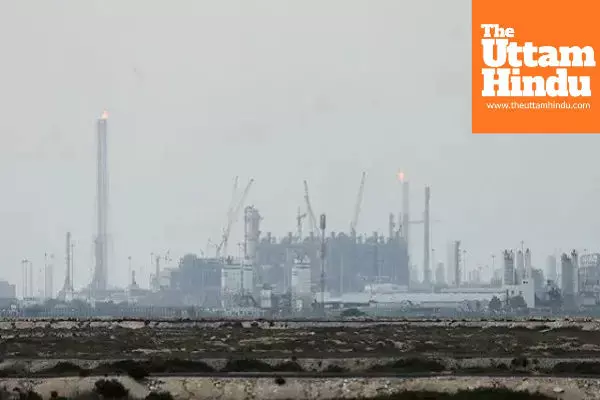
New Delhi (The Uttam Hindu): Escalating tensions in the Middle East have taken a serious turn as Iran reportedly targeted key oil and gas facilities in Qatar, triggering fresh concerns in the global energy market. The attack has significantly impacted Qatar’s liquefied natural gas (LNG) infrastructure, raising fears of long-term supply disruptions.
Major hit to LNG production
According to initial assessments, around 17 percent of Qatar’s total LNG export capacity has been affected due to damage at the Ras Laffan facility. Experts believe that repairs and restoration could take anywhere between three to five years.
QatarEnergy CEO and Energy Minister Saad Sherida Al-Kaabi stated that missile strikes on March 18 and 19, 2026 caused serious damage to production units. As a result, the company has declared force majeure on certain long-term LNG contracts.
He also indicated that Qatar could face an annual revenue loss of nearly $20 billion due to the disruption.
Key production units damaged
Two major LNG production units—Train 4 and Train 6—have been hit, with a combined capacity of 12.8 million tonnes per year. These units form a significant portion of Qatar’s export capability.
Impact on India and global markets
India is likely to face the most immediate impact, as nearly 47 percent of its LNG imports come from Qatar. In 2024, India imported about 27.8 million metric tonnes of LNG, out of which 11.30 MMT was sourced from Qatar.
Experts warn that any prolonged disruption could affect gas availability in India and lead to a rise in domestic prices, putting pressure on industries.
Apart from India, countries like China, South Korea, Italy and Belgium—also heavily dependent on Qatari LNG—could face supply challenges.
Global energy concerns intensify
The incident has heightened fears of instability in global energy supply chains. With the Middle East playing a crucial role in oil and gas exports, any prolonged conflict could have far-reaching economic consequences worldwide.