
Iran attacks oil tanker in Strait of Hormuz during conflict, 15 Indian crew onboard
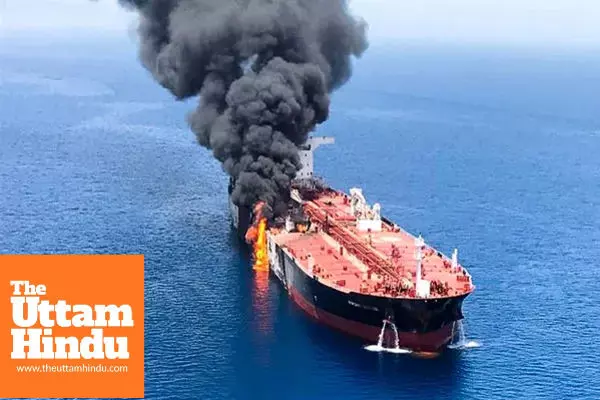
New Delhi (The Uttam Hindu): Amid the ongoing conflict between Israel and Iran, regional tensions have escalated sharply. On Sunday, an oil tanker was reportedly attacked in the strategically vital Strait of Hormuz. Four sailors were injured in the incident, while the vessel had a total crew of 20 members, including 15 Indians.
Tanker targeted near Oman coast
According to Oman’s Maritime Security Centre and state media reports, the Palau-flagged oil tanker ‘Skylight’ was targeted about five nautical miles from Khasab Port in Musandam province. The attack occurred amid rising threats in the region following recent military actions by the United States and Israel against Iran.
Reports suggest that Iran had issued radio warnings to ships passing through the Strait after the strikes. Maritime officials and sources linked to the European Union naval mission stated that Iran’s Revolutionary Guard had advised vessels to remain cautious and avoid passing through the area. Although Iran has not officially announced the closure of the Strait, growing risks have led insurance firms to raise war-risk premiums, while several major shipping companies have temporarily halted operations.
Why Strait of Hormuz is crucial
The Strait of Hormuz connects the Persian Gulf with the Indian Ocean and lies between Iran and Oman’s Musandam region. This roughly 50-kilometre-wide waterway is considered a lifeline for global energy supply, with nearly 20 percent of the world’s oil exports passing through it.
According to the US Energy Information Administration, it is one of the most critical oil chokepoints in the world. Any disruption in this route could severely impact global oil supply due to limited alternatives. Over 80 percent of oil and gas shipments through this route are destined for Asian markets.
Strategic islands add to concerns
Several strategically significant islands under Iran’s control, including Hormuz, Qeshm and Larak, are located in this region. Disputed islands such as Greater Tunb, Lesser Tunb and Abu Musa are also situated here and have been under Iranian control since 1971.
Analysts warn that further escalation in tensions could directly affect global energy markets, the shipping industry and maritime security. The international community continues to closely monitor developments in this sensitive sea route.