
Iran sets $2 million penalty for ships in Strait of Hormuz after US ceasefire
Iran proposes $2 million penalty on ships passing through Strait of Hormuz after US ceasefire, raising concerns over global trade and oil supply routes
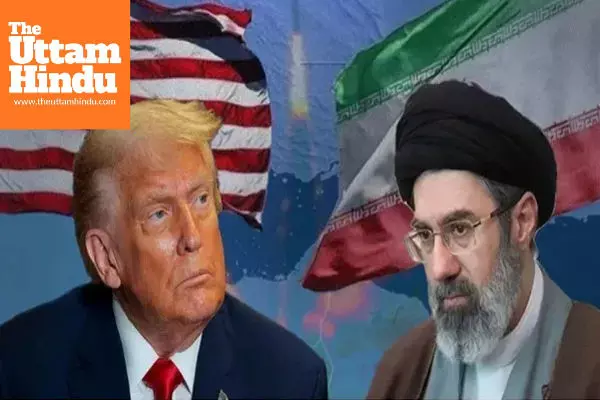
Tehran (The Uttam Hindu): Following a two-week ceasefire between Iran and the United States, Tehran has put forward a significant condition that could impact global shipping. According to reports, Iran has proposed imposing a penalty of up to $2 million on ships passing through the strategically vital Strait of Hormuz during the ceasefire period.
US President Donald Trump had earlier announced a temporary halt to military strikes on Iran, stating that the decision was linked to conditions surrounding the reopening of the Strait of Hormuz. He also revealed that Washington has received a 10-point proposal from Iran, which is currently under consideration.
Trump further claimed that China may have played a role in persuading Iran to engage in negotiations. Previously, he had also thanked Pakistan for its efforts in facilitating the ceasefire talks.
Meanwhile, Iran has asserted that its conditions have largely been accepted. It stated that if no further attacks are carried out against it, Iranian forces will adhere to the ceasefire for the next two weeks.
Iran’s Supreme Leader Mojtaba Khamenei has reportedly ordered an immediate halt to offensive actions. In a statement, Iran’s Foreign Minister Abbas Araghchi confirmed that Tehran agreed to the ceasefire after its 10-point proposal was acknowledged as a basis for negotiations.
Expressing gratitude, Araghchi thanked Pakistan’s leadership, including Prime Minister Shehbaz Sharif and Field Marshal Asim Munir, for their role in efforts to de-escalate the conflict. He added that Iran’s armed forces would suspend defensive operations if attacks cease, and that safe passage through the Strait of Hormuz would be ensured for the next two weeks, subject to coordination and technical conditions.
The development has major implications for global trade, as the Strait of Hormuz is one of the world’s most critical oil transit routes. Any financial or operational restrictions on shipping through this corridor could significantly impact international energy markets.