
Nature's fury: 'Blood rain' turns Hormuz island red, sparking global concern
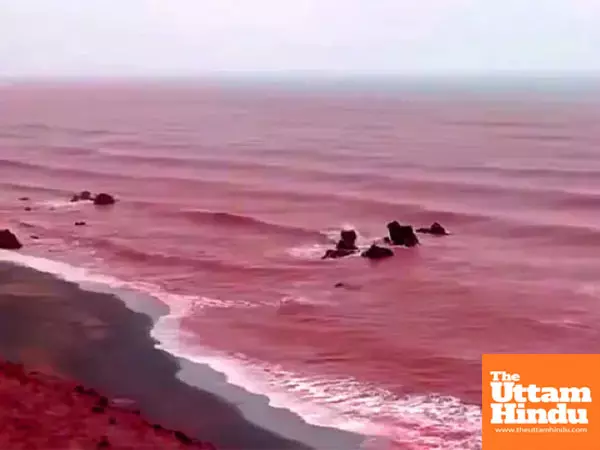
New Delhi (The Uttam Hindu) : Following recent heavy rains on Iran's Hormuz Island, nature created a scene that stunned onlookers. The sand and water on the beach appeared to be a deep blood red. At first glance, it appeared as if blood had rained from the sky, but the reason behind this was entirely natural.
The sight of Hormuz Island during the rains is not only a marvel but also gives us an understanding of the natural and geological processes taking place on the Earth's surface. The color change is simply a seasonal phenomenon and is not harmful.
Why did the sea turn red? Learn the scientific reason
The island of Hormuz is located near the Persian Gulf and the Strait of Hormuz. This island is known worldwide for its colorful topography and unique rocks. The soil here is high in iron oxide, especially a mineral called hematite. When rainwater flows through the hills and soil, tiny particles of hematite are washed down to the beach. These particles are what turn the sea water and sand a deep red. This scene is as dramatic as it is natural and safe.
Not a miracle, a natural process
According to experts, this isn't a mysterious or harmful phenomenon, but rather the result of ongoing geological processes on the Earth's surface. The color change is seasonal and gradually returns to normal after the rains stop.
The soil and rocks of Hormuz Island are composed of various minerals. Ochre, gypsum, and iron ore are the main components of this soil. Locals use this soil to make traditional dyes. The red hues after rain create a vast, colorful canvas created by nature.
The soil and rocks of Hormuz Island are rich in minerals such as ochre, gypsum, and iron ore. Locals also use this colorful soil in traditional paints and art. The sea and coast, bathed in red after rain, appear as if nature itself has created a vast colorful canvas.
- Tags
- #RedSea