
Oil spill spreads rapidly off UAE coast; satellite images reveal alarming extent
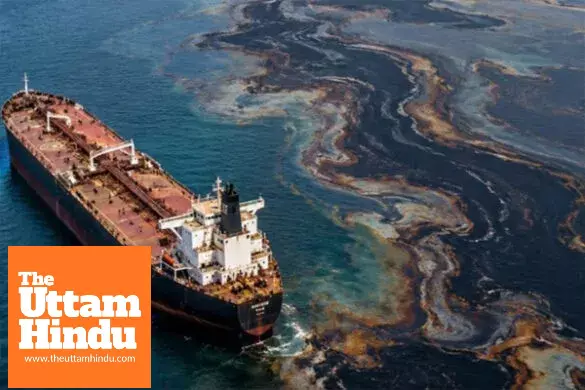
Dubai (The Uttam Hindu): A major oil spill from a damaged oil tanker in the coastal waters of the United Arab Emirates (UAE) has triggered a serious environmental crisis in the Gulf region. According to the latest images dated October 24 from the European Union’s Copernicus satellite network, a thick layer of black oil at sea is spreading rapidly and has reached dangerously close to the northern emirate of Umm Al Quwain. In view of the threat to the marine ecosystem, authorities have urgently imposed a complete ban on public and tourist access to several major beaches in Umm Al Quwain, Sharjah and Ras Al Khaimah.
GEM No. 2 tanker was reportedly attacked; satellite images reveal damage
Although the UAE Ministry of Climate Change and Environment has not officially confirmed the vessel’s name, international shipping experts and a Reuters investigation indicate that the spill is coming from an oil tanker named GEM No. 2.
Satellite images reportedly show burn marks from a fire and explosion near the tanker’s upper structure. These appear to match footage released by Iran’s Islamic Revolutionary Guard Corps (IRGC) last month. Shipping sources said the vessel was attacked by an unidentified projectile last month. Although the fire was extinguished, crude oil continues to leak into the sea through the damaged hull.
Beaches closed in Sharjah and Ras Al Khaimah; luxury resorts affected
As the oil spill moves towards coastal areas, all beaches in the city of Umm Al Quwain have been temporarily closed. In the neighbouring emirate of Sharjah, access to Al Hamriyah Beach has also been restricted for tourists and residents.
Authorities in Ras Al Khaimah, known for its scenic beaches and internationally renowned luxury resorts, have also ordered the closure of all beaches until further notice as a precautionary measure.
Professor Nidal Hilal, director of the Water Research Center at New York University Abu Dhabi, described the situation as deeply concerning. He said keeping the beaches closed was the safest course of action until the direction and extent of the oil spill could be accurately assessed.
Marine life and more than 500 species in the Gulf face growing risks
Amid rising military tensions between the United States, Israel and Iran, attacks on vessels along the Strait of Hormuz and nearby maritime trade routes reportedly reached record levels in October. These attacks have now led to a major environmental threat.
According to the International Union for Conservation of Nature (IUCN), the Gulf region is highly sensitive in terms of marine biodiversity. It is home to more than 500 fish species, rare dolphins, sea turtles and ancient coral reefs.
The rapidly spreading oil is reducing oxygen levels in the water, increasing the risk of large-scale deaths among aquatic organisms.
- Tags
- #UAE