
Pakistan ready for war, Bilawal says Modi 'afraid' of army chief Munir
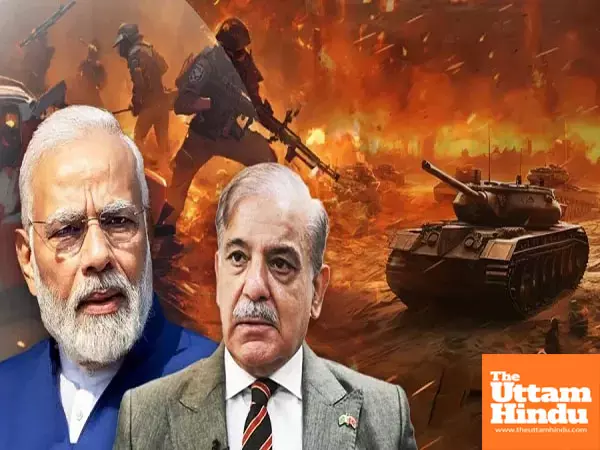
Karachi (The Uttam Hindu): Pakistan President Asif Ali Zardari has issued a scathing statement against India, claiming that Pakistan responded strongly to Indian attacks during the May conflict. He said that after this confrontation, the Indian government realized that war is no "child's play."
Addressing a rally in Karachi to mark the death anniversary of former Prime Minister Benazir Bhutto, Zardari said India should be grateful for Pakistan's restraint. He said Pakistan could have shot down more Indian fighter jets if it had wanted to. Zardari said Prime Minister Narendra Modi now understands that Pakistan knows how to defend itself and is fully prepared if war is forced again.
On this occasion, Pakistan Peoples Party (PPP) Chairman Bilawal Bhutto Zardari also launched a scathing attack on India and Prime Minister Modi. He lavished praise on Pakistani Army Chief Field Marshal Syed Asim Munir, saying that Modi falls silent at the mention of his name and no longer speaks against Pakistan abroad. Bilawal claimed that while India may consider itself a major power, it lacks the courage and passion of Pakistan's leadership and military.
Bilawal also said that he was advised to go into a bunker when the conflict began in May, but he refused. He said, "Leaders don't hide in bunkers; they stand on the ground." Bilawal claimed that Field Marshal Asim Munir played a key role in the conflict with India and responded to the enemy face to face. He also said that the international community is now accepting Pakistan's stance.
Bilawal Bhutto Zardari claimed that Pakistan won the India-Pakistan conflict in May and described it as the biggest achievement of the year 2025. He said that the unity of people from all four provinces of the country, even 18 years after the martyrdom of Benazir Bhutto, is a strong message against terrorism. He also said that Zulfikar Ali Bhutto made Pakistan a nuclear power, while Asif Ali Zardari strengthened relations with China and laid the foundation for the China-Pakistan Economic Corridor (CPEC).