
Uncertainty grows as Trump comments on India-Russia oil trade
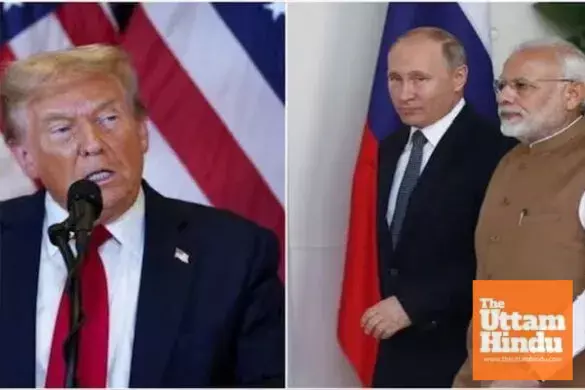
Washington (The Uttam Hindu): February 7, 2026, marked a historic turning point in relations between India and the United States. With the framework of an interim trade agreement finalized between the two countries, US President Donald Trump withdrew his harsh executive order against India, which had imposed an additional 25 percent tariff on India for purchasing Russian oil. However, even after the tariffs were lifted, the situation regarding the purchase of Russian oil remains unclear, and the matter remains shrouded in diplomatic mystery.
Trump's claim and the terms of the settlement
A new executive order signed by President Donald Trump makes a bold claim. It clearly states that India has committed to stopping oil imports, directly or indirectly, from Russia. In return, India has promised to purchase energy products from the United States and increase defense cooperation for the next 10 years. The US administration also included a warning in its order that if the US Commerce Secretary determines in the future that India has resumed purchasing Russian oil, the punitive tariff of 25 percent will be reimposed.
India's stance: No denial, but no acceptance either
There was no direct denial or confirmation from the Indian government on Saturday regarding Trump's bold claim. When officials were asked to comment, they referred to a statement made by Ministry of External Affairs (MEA) spokesperson Randhir Jaiswal on Thursday. India has officially stated that ensuring energy security for 1.4 billion Indians is the government's top priority. Diversifying its energy sources, given the international situation and changing markets, is fundamental to India's strategy. Experts believe that India, in order to maintain its strategic autonomy, does not want to publicly admit to bowing to any pressure, even though Russian oil imports have declined sharply in recent weeks.
Exporters get a lifeline, taxes reduced
Amidst the ongoing suspense over oil, this agreement is no less than a lifeline for Indian exporters. Following this deal, the effective tariff on Indian goods will be reduced from 50 percent to 18 percent. This will directly benefit exporters of textiles, gems and jewellery, pharmaceuticals, and aviation components, on whom additional duties have been removed. In exchange for this relief, India has agreed to reduce tariffs on American agricultural products such as almonds, walnuts, and soybean oil, as well as industrial goods. India has also agreed to make US purchases worth $500 billion over the next five years.
Russia and the reality of oil figures
Data shows that India's Russian oil imports reached a 38-month low in December 2025, indicating a shift toward US conditions. India has also kept open the option of purchasing oil from Venezuela and increasing LNG imports from the US. Russia, meanwhile, has responded cautiously to this development. Kremlin spokesman Dmitry Peskov stated that he has not received any official notification from India about the suspension of oil purchases and that Russia values its strategic partnership with India.