
US strikes Iranian missile sites near Strait of Hormuz, drops 5,000-pound bunker buster bomb
The US launched fresh strikes on Iranian missile sites near the Strait of Hormuz using bunker buster bombs, intensifying Operation Epic Fury amid rising Middle East tensions.
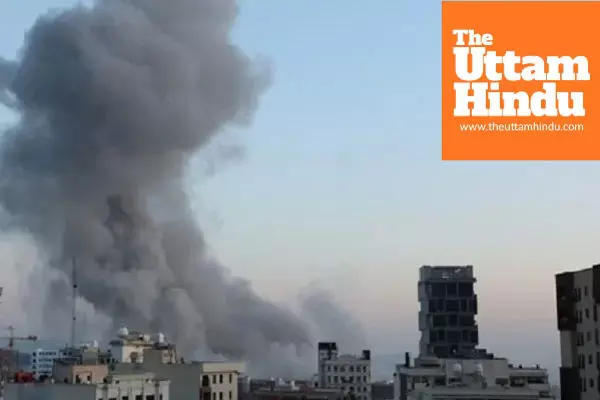
Washington (The Uttam Hindu): The United States has carried out fresh strikes on Iranian missile sites near the Strait of Hormuz, targeting positions that were reportedly posing a threat to international shipping routes. The action is part of “Operation Epic Fury,” which has now intensified further.
According to US Central Command (CENTCOM), heavy bunker-buster bombs were used in the strikes, capable of destroying fortified and well-protected installations. The targeted missile sites were located along Iran’s coastal areas near the Strait of Hormuz, where anti-ship missiles were deployed, posing risks to passing vessels.
This development marks a significant escalation in the operation, as maritime zones have now become a key focus. The Strait of Hormuz has emerged as a central hub of US military activity. CENTCOM stated that US naval aircraft have conducted hundreds of combat sorties during the operation, demonstrating sustained air power from sea-based platforms.
As per information released earlier, more than 7,000 targets have been struck since the campaign began on February 28. The operation, initiated under presidential directives, aims to weaken Iran’s defense infrastructure and neutralize immediate threats. Reports indicate that over 100 Iranian vessels have been damaged or destroyed so far, while US forces have flown more than 6,500 combat missions.
The strikes have targeted a wide range of military installations, including ballistic missile sites, anti-ship missile bases, facilities linked to the Islamic Revolutionary Guard Corps (IRGC), air defense systems and military communication networks.
The operation involves coordinated action across air, land and sea. Advanced bombers such as B-1, B-2 and B-52, along with fighter jets like F-22 and F-35, surveillance aircraft and drones, are being deployed. At sea, nuclear-powered aircraft carriers, submarines and missile-equipped warships have been positioned.
On the ground, systems such as Patriot and THAAD missile defense, rocket artillery and counter-drone technologies are being used, highlighting the multi-layered nature of the campaign.
Particular focus has been placed on anti-ship missile sites due to the strategic importance of the Strait of Hormuz, through which a significant portion of the world’s oil supply passes. Any disruption in this region could have major implications for global trade and energy markets.